http://www.youtube.com/watch?v=Yx_9bML2UYQ
Warning: there is some bad language.
Wednesday, April 4, 2012

Gypo review by Alex Hulisz
I chose to watch the first British Dogme 95 film called “Gypo”. This film followed all the Dogme 95 rules that you have read. This film centers on a working class British family that is struggling with various issues. The teenage daughter Kelly is trying to raise a baby, there is a very distant relationship between the parents, and Kelly is struggling to find work in order to support her child. Things turn for a change when a Czech refugee named Tasha enters their lives.

The purpose of this film was to show the story of how Helen befriended a Czech refugee, Tasha, through the eyes of three different characters, and the drama that unfolded at the end. I would describe this narrative pattern as a three-in-one type story. In Helen’s perspective, she would argue with Kelly about not being a responsible parent. She is tired of her monotonous life, and takes sculpture classes at night. This is where we first meet Tasha, and this relationship causes conflict in the family. At the end of her perspective, the director left the audience to interpret what happened to Tasha because she boarded a ferry and left without explanation. I thought this was an interesting way to end Helen’s perspective because it seemed that Tasha and Helen had a great relationship. Paul’s perspective was very depressing because of his melancholic and cynical character. The first time he meets Tasha, he explains why he hates refugees and throughout his perspective he constantly calls Tasha a “gypo”. At his job, he hires people off the street to help him roll carpets, and pays them cheap. He also sees a hooker, and this shows his disinterest towards his wife Helen. Tasha’s perspective fills in the missing parts of the story that were ambiguous in Helen and Paul’s perspective. Her perspective focuses on her daily struggles of harassment and her anxiety about her husband and father coming back to capture Tasha and her mother. She reveals the story of how she and Helen engaged in a lesbian romantic relationship. I suggest you watch “Gypo” to see how these three perspectives come together and how they unfold because it is unpredictable, interesting, and emotionally impacting.
 "Gypo" is a great example of how Dogme 95 incorporates powerful movies without the use of special effects and non-diegetic sound. The over-the-top special effects can often tune out the meaning purpose behind a movie because people often get distracted my fancy graphics. This helped me focus on the characters’ body language and facial expressions. I thought all the actors/actresses put on great performances because I felt their anguish during specific scenes. I thought the constant banter between Helen and her daughter Kelly depicted an accurate portrayal of how teenage girls rely too heavily on their mothers to take care of their babies. She wanted to live her typical high school life of hanging out with friends, but we never say Kelly pay much attention to the baby.
There are elements of globalization in this film. The main element of globalization stems from the large amount of refugees in England. They are taking a lot of jobs away from people and taxes are increasing because of them. Globalization causes animosity between Tasha and Paul at the dinner table because he can’t stand the “gypos”. One particular scene that I find fascinating about globalization is when Tasha and her mother buy fish and chips. This shows that they are willing to adapt to the British culture because they know they would rather live here than be persecuted in their home country.
Overall, I feel that Dogme 95 movies are endearing to watch because the film displayed realism and I felt that I was a by-stander watching the events of this movie unfold. This was the first Dogme 95 film I have ever seen, so at first I had difficulty getting used to the style of filming. Once I became used to the style of film, I really enjoyed it because I could focus on each of the main characters’ habits, personalities, and how each of their stories related to each other. The first 15-20 minutes of the film I was bored because there wasn’t a developing plot, but once Tasha entered, the drama started to heighten. There are elements of this movie that might make you feel uncomfortable, but they add emotional intensity to the film.

The purpose of this film was to show the story of how Helen befriended a Czech refugee, Tasha, through the eyes of three different characters, and the drama that unfolded at the end. I would describe this narrative pattern as a three-in-one type story. In Helen’s perspective, she would argue with Kelly about not being a responsible parent. She is tired of her monotonous life, and takes sculpture classes at night. This is where we first meet Tasha, and this relationship causes conflict in the family. At the end of her perspective, the director left the audience to interpret what happened to Tasha because she boarded a ferry and left without explanation. I thought this was an interesting way to end Helen’s perspective because it seemed that Tasha and Helen had a great relationship. Paul’s perspective was very depressing because of his melancholic and cynical character. The first time he meets Tasha, he explains why he hates refugees and throughout his perspective he constantly calls Tasha a “gypo”. At his job, he hires people off the street to help him roll carpets, and pays them cheap. He also sees a hooker, and this shows his disinterest towards his wife Helen. Tasha’s perspective fills in the missing parts of the story that were ambiguous in Helen and Paul’s perspective. Her perspective focuses on her daily struggles of harassment and her anxiety about her husband and father coming back to capture Tasha and her mother. She reveals the story of how she and Helen engaged in a lesbian romantic relationship. I suggest you watch “Gypo” to see how these three perspectives come together and how they unfold because it is unpredictable, interesting, and emotionally impacting.

There are elements of globalization in this film. The main element of globalization stems from the large amount of refugees in England. They are taking a lot of jobs away from people and taxes are increasing because of them. Globalization causes animosity between Tasha and Paul at the dinner table because he can’t stand the “gypos”. One particular scene that I find fascinating about globalization is when Tasha and her mother buy fish and chips. This shows that they are willing to adapt to the British culture because they know they would rather live here than be persecuted in their home country.
Overall, I feel that Dogme 95 movies are endearing to watch because the film displayed realism and I felt that I was a by-stander watching the events of this movie unfold. This was the first Dogme 95 film I have ever seen, so at first I had difficulty getting used to the style of filming. Once I became used to the style of film, I really enjoyed it because I could focus on each of the main characters’ habits, personalities, and how each of their stories related to each other. The first 15-20 minutes of the film I was bored because there wasn’t a developing plot, but once Tasha entered, the drama started to heighten. There are elements of this movie that might make you feel uncomfortable, but they add emotional intensity to the film.
Sunday, April 1, 2012

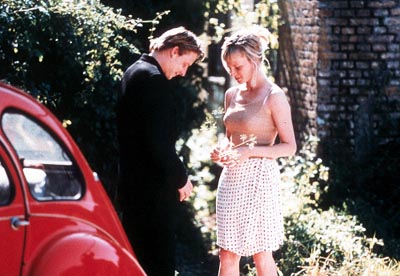 |
| Kresten and Liva |
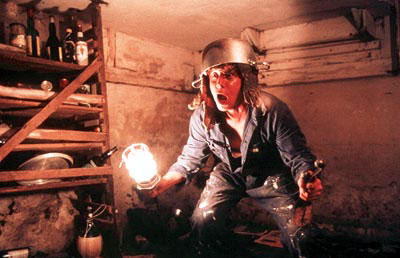 |
| Kresten Pretending to be "Mifune" |
Even though this film is rated R, I looked over the sex scenes and vulgar language in order to enjoy the film. One important message the movie portrays throughout is the fact that true love cannot be bought or packaged in a certain way and it will not last if . True love is as real as humans are. It has its ups and downs, but in the end, it will never be shaken nor broken. Both Liva and Kresten grew to love one another because of who they are not what they have done or where they live.
-Heather :)
Saturday, March 31, 2012
http://content.ebscohost.com/pdf14_16/pdf/2000/nrp/20mar00/2879563.pdf?T=P&P=AN&K=2879563&S=R&D=a9h&EbscoContent=dGJyMNHX8kSeqa84y9fwOLCmr0qep7NSr6a4SbGWxWXS&ContentCustomer=dGJyMPGusk%2B1q7NKuePfgeyx44Dt6fIA
The above link is an excellent read. Just skip to the section about "Mifune." It gives great background information about this film. (NOTE: One must be logged into EBSCOHost Database to view).
-Heather :)
The above link is an excellent read. Just skip to the section about "Mifune." It gives great background information about this film. (NOTE: One must be logged into EBSCOHost Database to view).
-Heather :)
Friday, March 30, 2012
http://movies.nytimes.com/movie/review?res=9D02E1D71130F936A15751C0A9669C8B63
The link above will take you to a movie review about the film "Mifune." It gives the reader a clear picture of what the film is about and what to expect. After I read this article, I now know what to anticipate before watching this film. I personally have never been partial to movies that contain sex scenes because I have the strong belief that intimacy is a private matter and cannot truly be recreated to express what true love really is. We, the viewers, cannot know what the couple is feeling when love is made. The couple only knows what this "close moment " feels like. The viewer can only imagine what they may be feeling, and making these assumptions destroys the secretiveness of sex. Regardless, the film does have a good message behind it- material things come and go but true love and relationships sustain us and last a lot longer.
-Heather :)
The next film I will soon be watching is titled "Mifune." Here is the link to the trailer for the movie, but beware there are some suggestive scenes in it. Do not watch it if you may find it offensive.
http://www.youtube.com/watch?v=o6PsTbD8tZQ
The link below will take you to another trailer for this film that uses an English speaking narrator who better explains the movie than does the trailer above. Again, it has rated R scenes in it; therefore, do not view it if you care not to see them.
http://movies.nytimes.com/movie/176580/Mifune/trailers
-Heather :)
Wednesday, March 14, 2012
The King is Alive-- A film by Kristian Levring
The following is a link to a theatrical trailer of the film, The King is Alive. http://www.youtube.com/watch?v=y1y2Ue5Vd98
The King is Alive is a film about a group of people who find themselves stranded in a desert after their bus takes a wrong turn and runs out of gas. Whilst trying to survive, the stranded group of people decide to put on a reproduction of William Shakespeare's King Lear in hopes of taking their minds off of their situation. The film focuses a great deal on dark human emotions. It seems as though every character has a "skeleton in the closet," if you will. Each character begins to change as they slowly become more aware that the possibility of never being rescued is a great one.
 The film opens with the dogma 95 certificate/manifesto letting the viewer know that the film will abide by the rules set up by the framers of the dogma 95 movement. As with the previous film that I had posted about (Kira's Reason), the camera was often shaky, the film was clearly 35 mm, and so on. That which I appreciate the most about dogma films is that they are incredibly raw and basic. The framers of the dogma 95 movement recognized that mainstream film sought to "buy" their audience with over-the-top special effects and dramatic, non-diagetic musical scores. I often find myself asking, "Do I like this movie because it is aesthetically good, or am I more captivated by the music and the effects?" This could be something that the framers of the dogma movement thought themselves. Anyone can make a film that will sell if they have enough money in their budget (I use the term "anyone" loosely). Dogme seeks to break down film into it's purest forms; adjusting its focus away from flashy effects and moving towards camera work, cinematography, and storytelling. When this is done, the audience receives a better, more in-depth insight into the story and the characters.

This is why we are able to get such a deep, emotional image of the characters in this film. Not only are we seeing these films at their simplest, most basic form, but we are also seeing humanity in a basic form. We are gaining an awareness of what makes a character who they are and what makes them behave the way that they behave. The King is Alive captures this idea beautifully. We are introduced to characters, who we follow throughout the film, who we watch struggle for survival, and who we can relate to.
Aesthetically, there are a few choices that the director made that I would like to shed some light on. Throughout the film the camera was shaky. Normally, I would write this off as just being a convention of dogma films (tripods are not allowed; rule 3). For this film however, I feel as though the camera was shaky for a reason, which I will explain below. Something else that I noticed was that the director chose to use a lot of jump-cuts; quickly jumping sporadically from shot to shot. Often, these shots were unfocused during the quick jumps. I think both of the things that I noticed signified the same emotion. When I thought about what they could mean I just kept thinking about how chaotic the shots were and how confusing they were. Perhaps that's how the filmmaker wanted the movie to feel; chaotic and confusing. This could be because this was how the characters felt in the film.
Overall, I enjoyed The King is Alive. It was a very dark film about survival and coping with tragedy. It is a great representation of the goal that the creators of the dogme movement wanted to strive towards.

The following is a link to a theatrical trailer of the film, The King is Alive. http://www.youtube.com/watch?v=y1y2Ue5Vd98
The King is Alive is a film about a group of people who find themselves stranded in a desert after their bus takes a wrong turn and runs out of gas. Whilst trying to survive, the stranded group of people decide to put on a reproduction of William Shakespeare's King Lear in hopes of taking their minds off of their situation. The film focuses a great deal on dark human emotions. It seems as though every character has a "skeleton in the closet," if you will. Each character begins to change as they slowly become more aware that the possibility of never being rescued is a great one.
 The film opens with the dogma 95 certificate/manifesto letting the viewer know that the film will abide by the rules set up by the framers of the dogma 95 movement. As with the previous film that I had posted about (Kira's Reason), the camera was often shaky, the film was clearly 35 mm, and so on. That which I appreciate the most about dogma films is that they are incredibly raw and basic. The framers of the dogma 95 movement recognized that mainstream film sought to "buy" their audience with over-the-top special effects and dramatic, non-diagetic musical scores. I often find myself asking, "Do I like this movie because it is aesthetically good, or am I more captivated by the music and the effects?" This could be something that the framers of the dogma movement thought themselves. Anyone can make a film that will sell if they have enough money in their budget (I use the term "anyone" loosely). Dogme seeks to break down film into it's purest forms; adjusting its focus away from flashy effects and moving towards camera work, cinematography, and storytelling. When this is done, the audience receives a better, more in-depth insight into the story and the characters.
This is why we are able to get such a deep, emotional image of the characters in this film. Not only are we seeing these films at their simplest, most basic form, but we are also seeing humanity in a basic form. We are gaining an awareness of what makes a character who they are and what makes them behave the way that they behave. The King is Alive captures this idea beautifully. We are introduced to characters, who we follow throughout the film, who we watch struggle for survival, and who we can relate to.
Aesthetically, there are a few choices that the director made that I would like to shed some light on. Throughout the film the camera was shaky. Normally, I would write this off as just being a convention of dogma films (tripods are not allowed; rule 3). For this film however, I feel as though the camera was shaky for a reason, which I will explain below. Something else that I noticed was that the director chose to use a lot of jump-cuts; quickly jumping sporadically from shot to shot. Often, these shots were unfocused during the quick jumps. I think both of the things that I noticed signified the same emotion. When I thought about what they could mean I just kept thinking about how chaotic the shots were and how confusing they were. Perhaps that's how the filmmaker wanted the movie to feel; chaotic and confusing. This could be because this was how the characters felt in the film.
Overall, I enjoyed The King is Alive. It was a very dark film about survival and coping with tragedy. It is a great representation of the goal that the creators of the dogme movement wanted to strive towards.
Subscribe to:
Posts (Atom)